This project takes a closer look at the commercial surveillance camera industry, especially where software, hardware, and emerging tech intersect. With demand rising across sectors like retail, logistics, and urban infrastructure, it’s a space shaped by both rapid innovation and real-world constraints. The analysis explores how the market is growing, what kinds of features businesses are prioritizing, and how pricing, regulation, and regional trends factor into adoption. It’s meant to serve as a practical reference for understanding the current state of the industry and where it might be heading.
(Summary of insights below visualizations)
Key Insights
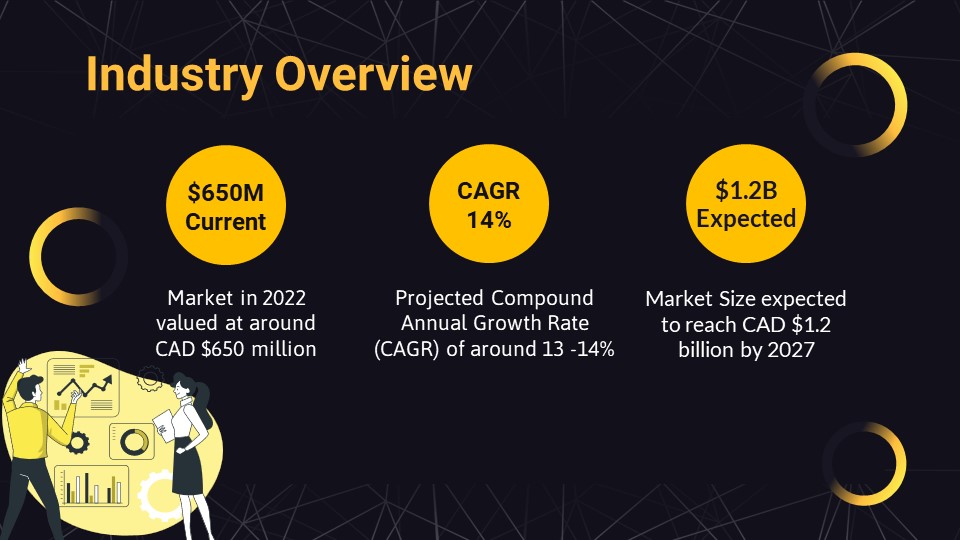
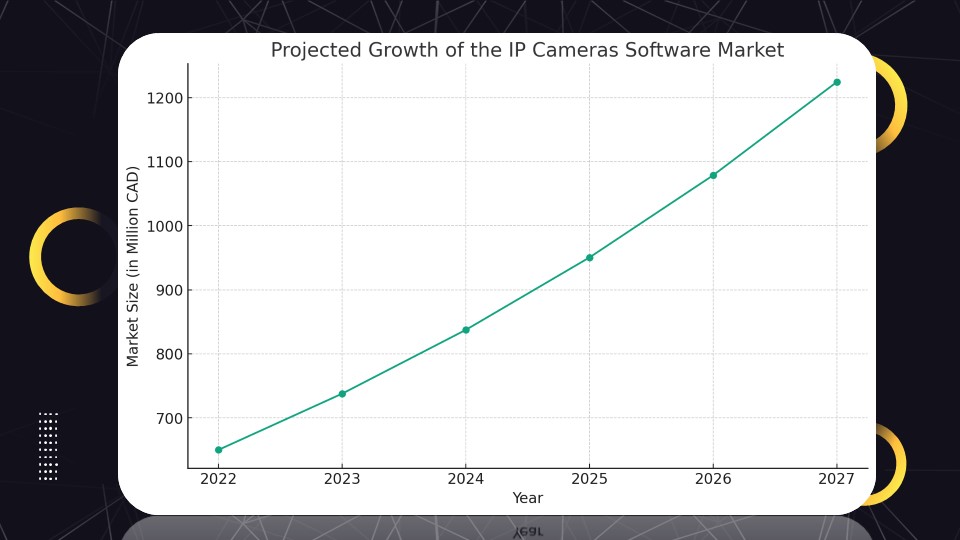
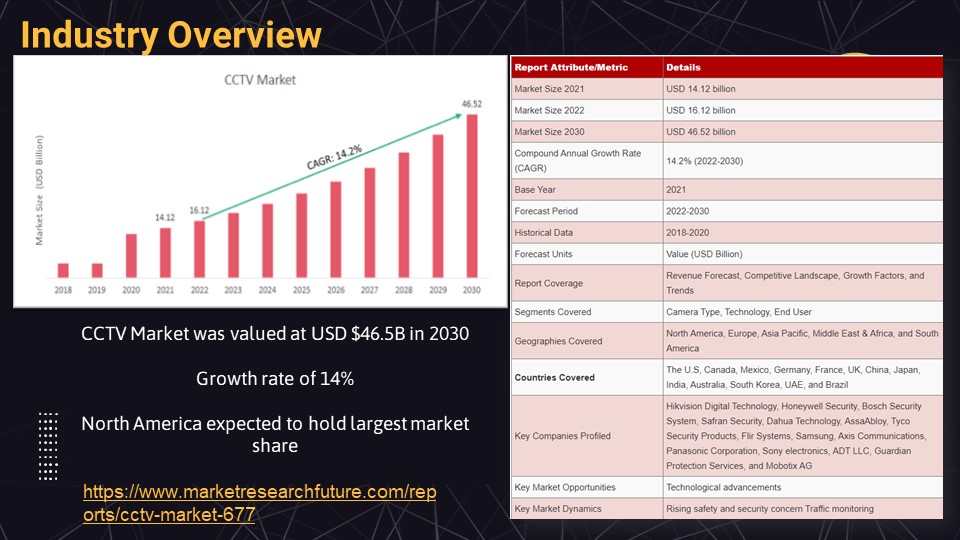
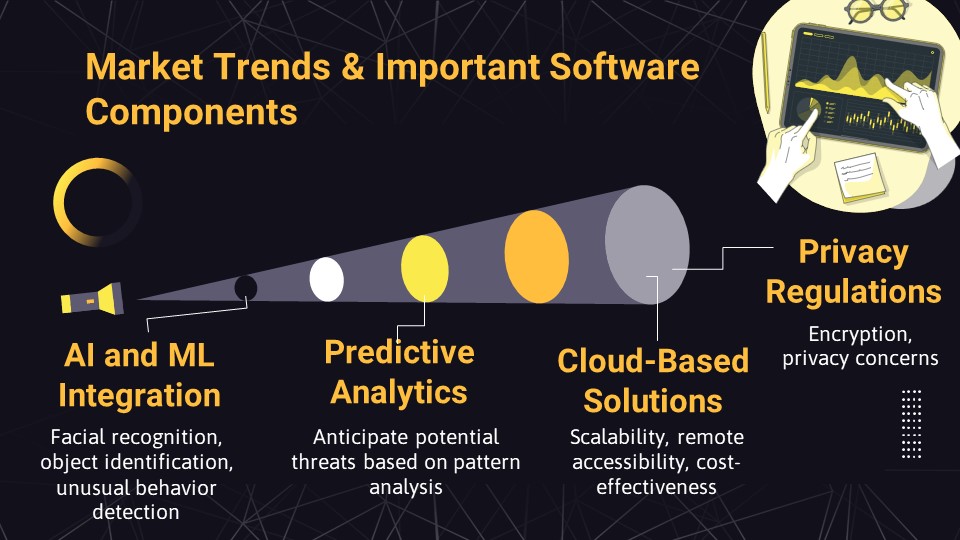
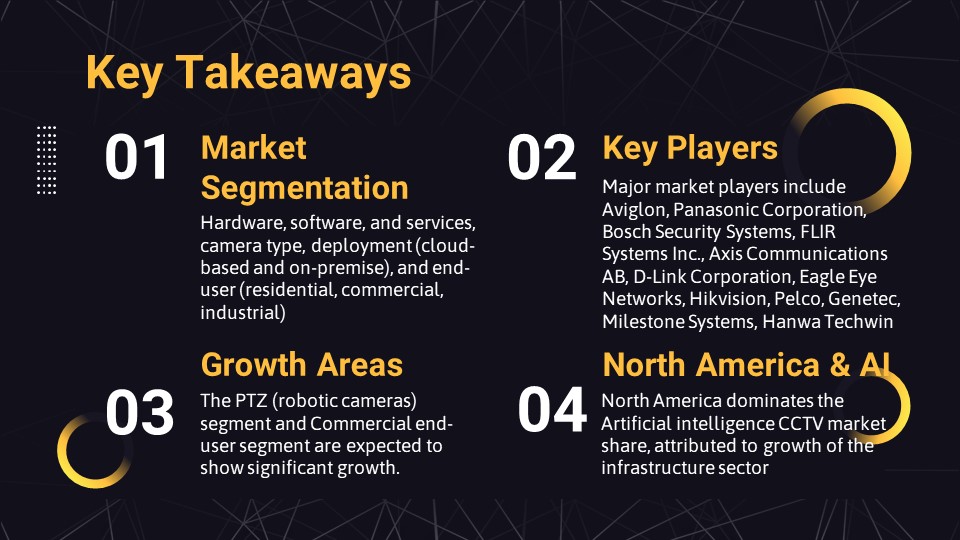
The data shows steady growth in the IP camera software market, valued at CAD 650 million in 2022 and projected to reach CAD 1.2 billion by 2027. The global CCTV market is on a similar trajectory, expected to reach over USD 46 billion by 2030. This growth appears driven by increased interest in cloud-enabled systems and the incorporation of AI features like facial recognition and behavior detection.
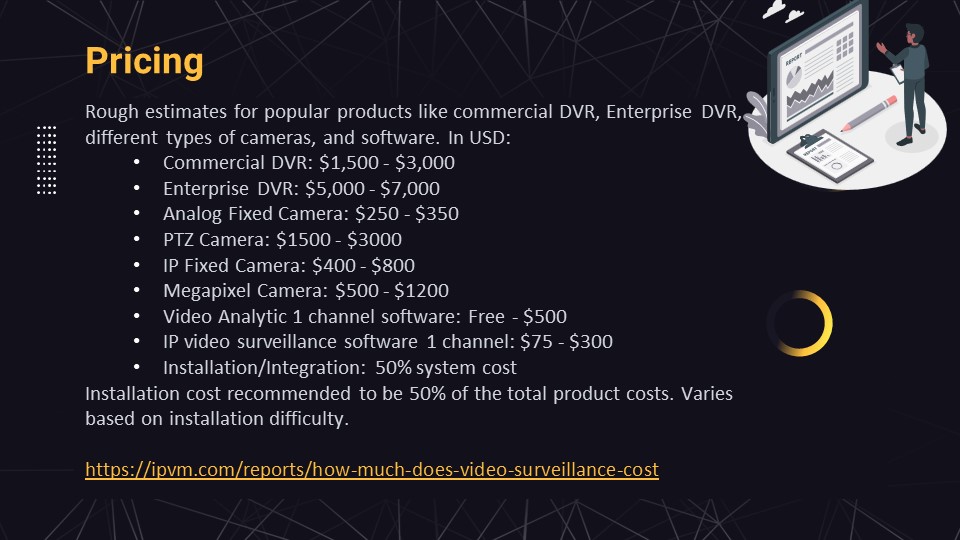
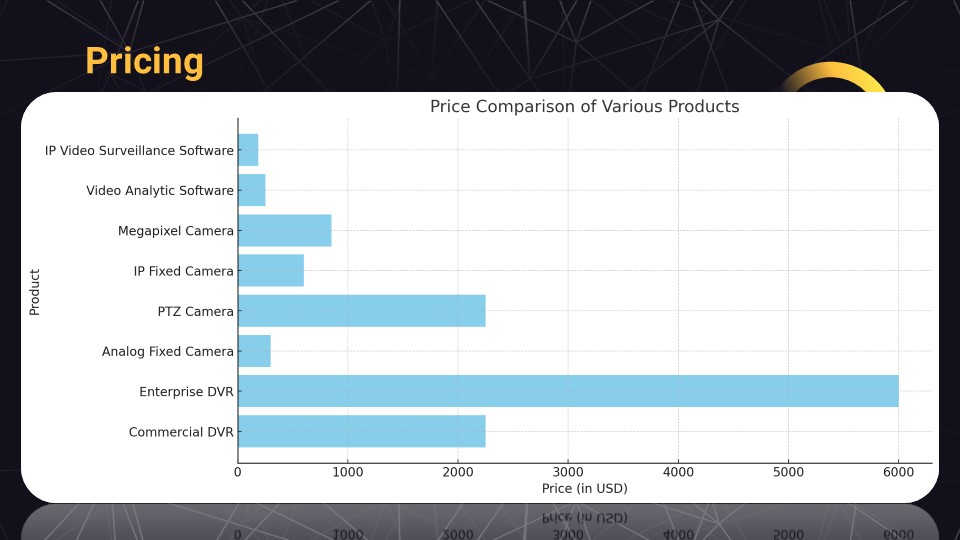
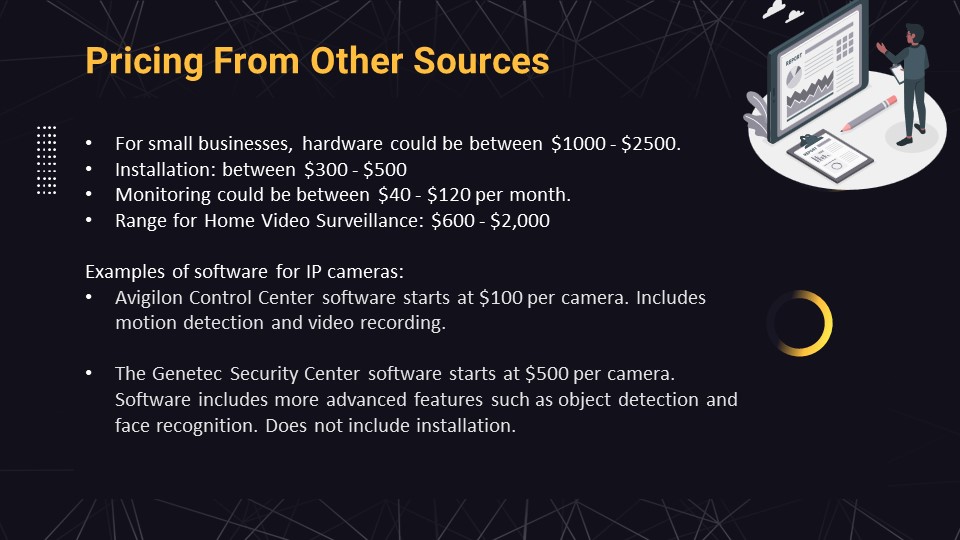
North America holds the largest market share, likely due to infrastructure maturity and early adoption of intelligent surveillance tools. Key players include Avigilon, Hanwha, Bosch, and others offering a range of hardware and software solutions, with pricing that varies widely depending on use case—from basic analog setups to higher-cost enterprise DVRs and advanced analytics platforms.
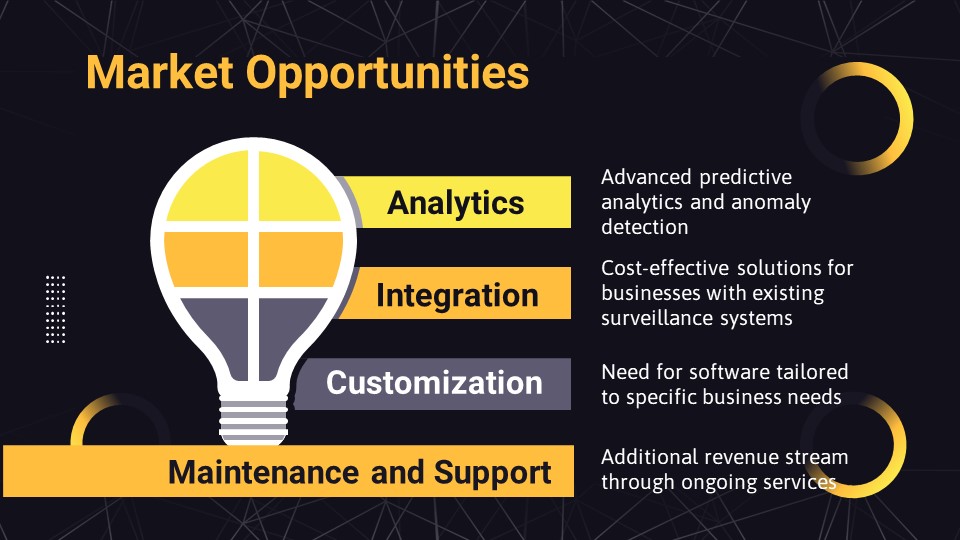
One consistent theme is the need for systems that can integrate easily with existing setups. Customization is also important, especially for businesses with specific surveillance needs. Ongoing maintenance and support services are another area with growing demand, particularly as systems become more complex.
Privacy and compliance remain key considerations, especially with the increase in cloud-based monitoring. Encryption and data handling practices are becoming more central to purchase decisions.
Overall, the report points to a sector that is evolving in both scale and complexity. While the technology is advancing quickly, the decision factors for businesses remain practical—cost, reliability, integration, and long-term support.